baby naming tips
How to Start a Baby Name List: A 30-Minute Shortlist Method
Start your baby name list without endless scrolling. Use this practical 30-minute method to find patterns, compare ideas, and keep five to ten strong names.

AI-assisted · Clara Vale writing voice
On this page
- The goal is a starter list, not a final answer
- Before you start: choose three loose filters
- Minutes 5–15: collect 20 names from four lanes
- Lane 1: names already around you
- Lane 2: family and heritage
- Lane 3: a focused data source
- Lane 4: deliberate wildcards
- Minutes 15–20: mark your first reaction
- Minutes 20–25: find the pattern behind the names
- Minutes 25–30: keep five to ten names
- Copy this 30-minute baby name worksheet
- How Namely can replace the blank page
- What to remember
If you have opened a baby name list and immediately felt overwhelmed, start smaller. You do not need to find the name today. You only need a useful first shortlist.
Set a 30-minute timer, collect 20 names from four different sources, then narrow them to five to ten worth exploring. That is enough to reveal your taste without turning the search into a second job.
This method works whether you are choosing alone, with a partner, or simply gathering ideas before you invite anyone else into the decision.
The goal is a starter list, not a final answer
A blank page creates pressure because every name feels as though it must be a serious contender. It does not.
Your first list has a simpler job: show you what catches your attention. Some names will survive. Others will teach you that you like a particular sound, length, origin, nickname, or level of familiarity.
For this first session, aim for:
- 20 names collected without lengthy debate
- five to ten names kept for another day
- two or three patterns noticed about your taste
You are gathering signals, not making a commitment.
Before you start: choose three loose filters
Give yourself five minutes to set direction. Choose one preference from each row below—or write your own.
| Question | Example directions |
|---|---|
| How familiar should the name feel? | familiar, uncommon but recognizable, genuinely rare, open to anything |
| What should it sound like? | short, flowing, strong consonants, soft sounds, nickname-friendly |
| What connection matters most? | family, language, cultural heritage, meaning, style, none required |
Keep these filters loose. “Short” might mean one or two syllables, not an absolute ban on longer names. “Familiar” does not need to mean popular. You are creating a searchlight, not a rulebook.
If you are working with a partner, complete this step separately. Comparing your filters too early can make one person edit their taste before either of you has explored it.
Minutes 5–15: collect 20 names from four lanes
Use four different discovery lanes and save roughly five names from each. The variety matters: if you only read one enormous alphabetical list, the names can begin to blur together.
Lane 1: names already around you
Think about names you have noticed in books, credits, family trees, workplaces, sports, music, or everyday life. Record the name, not the person’s entire story.
You are not deciding whether to use it. You are noticing that its sound or shape stayed with you.
Lane 2: family and heritage
Look at family records, community sources, or names used in the languages that matter to you. A direct honor name is only one option; a related sound, initial, middle name, or variant may carry the connection more naturally.
If a name comes from a language or culture you do not know well, save it with a question mark. Verify its spelling, pronunciation, meaning, and context with authoritative sources or people who know that tradition before it reaches the final shortlist.
Lane 3: a focused data source
If the baby will be named in the United States, the Social Security Administration’s baby name data can help you explore by year, decade, or state. The data come from Social Security card applications, so treat the rankings as a useful US popularity measure—not as a complete count of every birth or a worldwide trend.
Use the data to answer a question such as “Which familiar names have become less common?” rather than copying the top 100 into your notes.
Outside the US, look for the official statistics agency in the country that matters to your family. Read its methodology before comparing rankings from different places.
Lane 4: deliberate wildcards
Add five names outside your current pattern. Try a different first letter, length, era, or level of familiarity.
Wildcards prevent your first assumptions from defining the whole search. If you dislike all five, that is still useful information. If one surprises you, ask what makes it work.

Keep the first pass simple: capture your reactions before you start debating the details.
Minutes 15–20: mark your first reaction
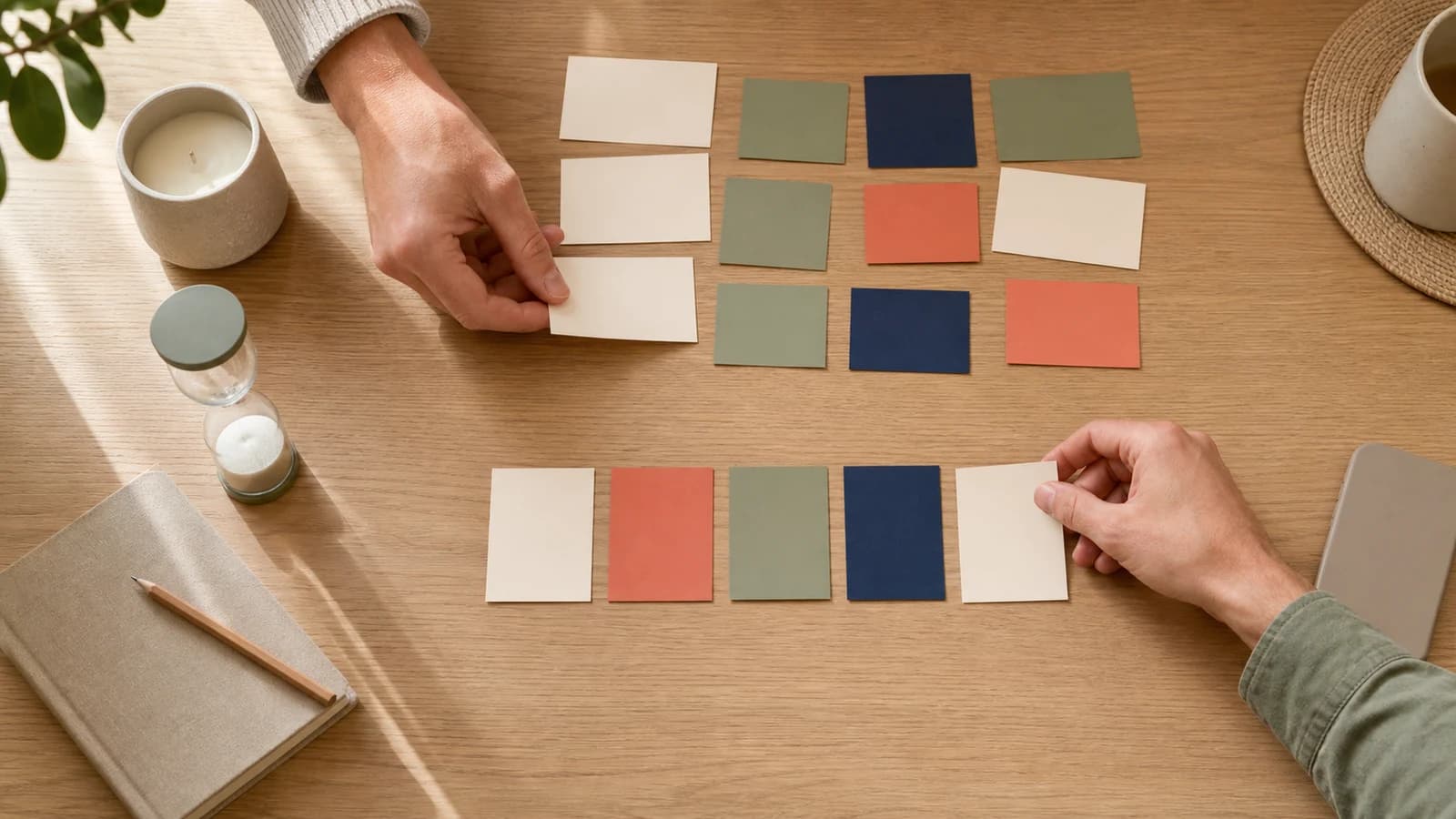
Read the 20 names once and give each one a simple mark:
- Keep: I want to see this again.
- Curious: something about it interests me.
- Not now: it does not belong in this version of the list.
Do not score names out of ten. A precise number suggests a level of certainty you probably do not have yet. Do not research every “curious” name either; that can consume the whole session.
If you are choosing with someone else, keep your first reactions private. Independent choices make genuine overlaps easier to spot and reduce the urge to defend a name before it has had time to settle.
Minutes 20–25: find the pattern behind the names
Look only at your “keep” and “curious” names. What do they have in common?
Check for:
- repeated sounds or endings
- a preference for one, two, or three syllables
- traditional names with informal nicknames
- a particular language, era, or style
- names that feel familiar without being highly visible
- names that look different on paper but have a similar rhythm
Write down two or three observations. For example:
I seem to like two-syllable names with a clear ending, familiar spelling, and no automatic nickname.
That sentence is more useful than another 500-name list. It gives your next search a shape.
Minutes 25–30: keep five to ten names
Create a starter shortlist of five to ten names. Include:
- at least three clear “keep” names
- one or two “curious” names that stretch your taste
- no name you already feel obliged to defend
Then stop. A shortlist needs time more than it needs constant additions.
Choose a date for the next review—tomorrow, next weekend, or after your partner has completed the same exercise. When you return, notice which names you are pleased to see and which ones you had already forgotten.
Copy this 30-minute baby name worksheet
You can paste this into a note or write it on paper:
- My three loose filters: familiarity, sound, connection.
- Five names I already notice: everyday inspiration.
- Five names with family or cultural relevance: verify later where needed.
- Five names from an official or focused source: explore with one question in mind.
- Five wildcards: deliberately outside my pattern.
- My two or three taste patterns: what the keepers share.
- My starter shortlist: five to ten names for the next session.
The worksheet is successful even if none of the first 20 becomes the final name. Its value is the clearer search that follows.
How Namely can replace the blank page
If a timed worksheet feels too formal, use Namely as the discovery layer. Set the preferences that matter, add a surname if you want to hear the full-name fit, then react to one name at a time instead of scanning an endless page.
Save the names that interest you. Connected partners can see each other's liked names, with mutual likes shown first. If you want to record reactions before sharing them, use separate notes or do that exercise before connecting.
Once you have a starter list, move to the deeper decision process in How to Choose a Baby Name You Both Love. That guide covers fair vetoes, partner disagreements, full-name checks, family opinions, and the final decision.
What to remember
Your first baby name list does not need to be exhaustive, impressive, or final. It needs to be small enough to understand.
Thirty focused minutes can give you 20 ideas, a five-to-ten-name shortlist, and a clearer picture of what you actually like. That is plenty for one session—and a much better beginning than another open tab with thousands of names.