baby naming tips
How to Choose a Baby Name That Works in Two Languages
Choosing a bilingual baby name? Use this respectful sound check to compare pronunciation, spelling, stress, and acceptable variations in two languages.

AI-assisted · Mina Rao writing voice
On this page
- First, define what “works” means for your family
- Build a two-language sound card
- Compare the parts that actually change
- 1. Individual sounds
- 2. Sound combinations
- 3. Stress, rhythm, or tone
- 4. The full name
- Keep spelling and pronunciation as separate decisions
- Run a real-voice pronunciation test
- Decide which differences you can welcome
- A final shortlist check
- Use Namely as the discovery layer
- What to remember
A baby name does not need to sound identical in two languages to work in both. It needs versions your family can recognize, say with care, and genuinely accept.
That distinction matters. A search for “bilingual baby names” can quickly become a list of supposedly universal choices. But no name works everywhere, and no language has just one accent. The useful question is narrower:
Can the people who will use this name say it comfortably—and can we respect the ways each community naturally says it?
This guide gives you a two-language sound check for answering that question without pretending every vowel, consonant, stress pattern, or tone has a perfect match.
First, define what “works” means for your family
Before testing names, agree on the goal. “Easy in both languages” can hide several different priorities:
- relatives can say and recognize the name
- the name keeps an important cultural or family connection
- the spelling works in the scripts your family uses
- both natural pronunciations feel acceptable
- the everyday nickname travels more easily than the full name
- the full name sounds comfortable with the surname
Choose your top two. A name may be beautifully rooted in one language and require patient teaching in another. Another may travel smoothly but carry less family meaning. Neither result is automatically better.
Also name the actual language communities involved. “English and Arabic” is a starting point, not a complete description. Which countries, regions, cities, dialects, generations, and family voices will shape daily use?
English alone has wide regional variation. The International Dialects of English Archive lets you hear primary-source recordings from speakers around the world. It is a useful reminder that an “English pronunciation” is never the only possible pronunciation.
Write a specific scope such as:
We are testing this name with my family’s everyday language, my partner’s family pronunciation, and the US English we expect to hear locally.
That is more realistic than asking whether a name works in two languages everywhere.
Build a two-language sound card
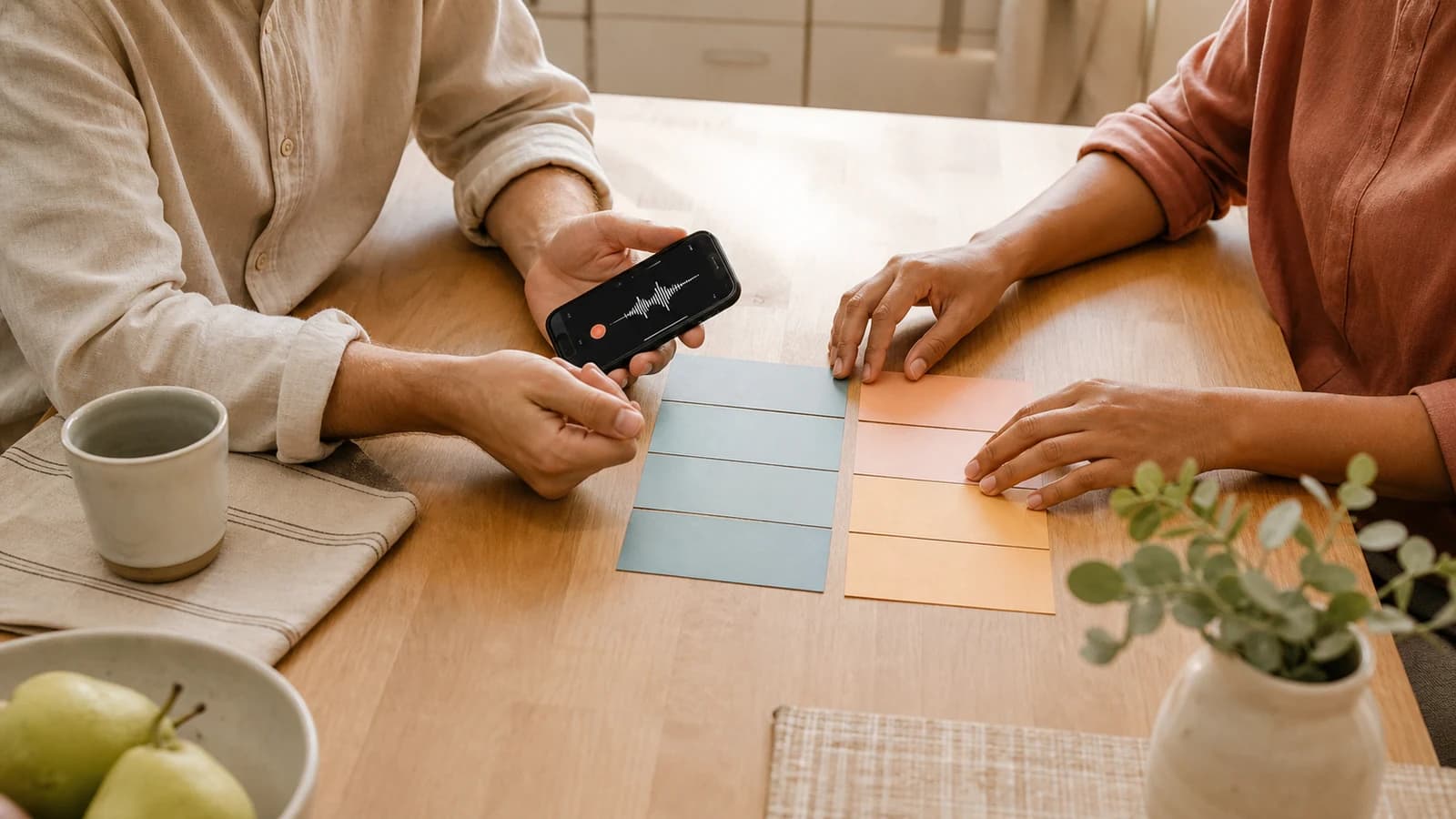
Choose one serious contender. Ask a fluent family member, community member, language teacher, or another trusted speaker from each relevant community to say it naturally. If the name comes from a tradition neither parent knows well, start with people and primary cultural or language sources from that tradition rather than a baby-name website.
Record the two pronunciations with permission, then make a simple card:
| Check | Language or community A | Language or community B |
|---|---|---|
| Natural pronunciation | Write a listening cue or attach a recording | Write a listening cue or attach a recording |
| Syllable count | How many beats do you hear? | How many beats do you hear? |
| Stress or tone | Which part carries emphasis or pitch? | Which part carries emphasis or pitch? |
| Hardest sound | Which sound needs practice? | Which sound needs practice? |
| Everyday variation | What might relatives naturally change? | What might relatives naturally change? |
| Family verdict | Comfortable, learnable, or not right for us? | Comfortable, learnable, or not right for us? |
Your listening cue is just a memory aid. Avoid presenting English-looking spellings such as “ah,” “ee,” or “j” as universal pronunciation rules; readers from different language backgrounds may interpret them differently.
If you want a more precise record, the International Phonetic Association’s official chart provides symbols for speech sounds, stress, tone, and other features. You do not need to learn the whole International Phonetic Alphabet. A fluent speaker or language professional can help you note the few details that ordinary spelling misses.

A name can belong in two sound systems without producing one identical pronunciation.
Compare the parts that actually change
Listen to the recordings side by side. Work through four layers.
1. Individual sounds
Notice the beginning, middle, and ending. Is there a consonant or vowel that one speaker replaces with the closest sound available in their usual speech?
Do not label that version “wrong” simply because it differs from the source-language model. Ask the people connected to the name whether the variation feels natural, respectful, and recognizable.
2. Sound combinations
A single sound may be comfortable while a cluster of sounds is not. Slow the name down, then say it at conversational speed. Listen for places where a speaker consistently adds, drops, or separates a sound.
The test is not “Can someone imitate this once?” It is “Can people who matter to us use a version they can say naturally?”
3. Stress, rhythm, or tone
Two speakers may use the same broad sequence of sounds but place emphasis differently. In some languages, pitch patterns can distinguish words or names; in others, stress or vowel length may carry more of the contrast.
Ask a fluent speaker what listeners notice first. Do not guess from the written form, and do not treat one recording as proof for every region.
4. The full name
Say the first name with the surname, likely middle name, and any everyday nickname. A small pronunciation challenge may feel fine in isolation but become awkward in the full sequence—or the full name may flow more easily than expected.
Keep spelling and pronunciation as separate decisions
If the two languages use different scripts, you may be choosing both an original-script form and a Latin-letter form for contexts where that form is used.
Romanization or transliteration converts writing from one script to another. It does not guarantee that a reader will reproduce the original pronunciation. The Unicode Consortium’s transliteration guidelines explicitly note that standard transliterations may not follow the pronunciation rules of a particular target language.
For each finalist, check:
- the preferred form in the original script
- the Latin-letter spelling your family would use, if needed
- whether that spelling is a standard system, a family convention, or a practical adaptation
- how people in each community are likely to read it without guidance
- whether alternate spellings change cultural context or meaning
Do not drop diacritics or alter a spelling automatically to make it look easier in English. Ask what the change does in the source language and how the people connected to the name feel about it.
Run a real-voice pronunciation test
Now move beyond the two recordings. Ask a small mix of people from the communities that will actually use the name:
- a close relative from each language background
- a fluent speaker from the relevant region or community
- a US English speaker, if that will be part of the child’s daily context
- someone who has not seen the name before
Give half the group the written name first. Let the other half hear it first. This separates two questions:
- Can people reproduce the sound after hearing it?
- What pronunciation does the spelling invite before they hear it?
Ask each person to say the name, repeat it after hearing your preferred version, and describe any sound that feels unfamiliar. You are collecting reactions, not running a vote on whether the name is attractive.
Avoid asking one person to represent an entire language. If two fluent speakers differ, note the variation and ask whether it is regional, generational, personal, or connected to another language they speak.
Decide which differences you can welcome
After the test, sort each variation into one of three groups:
| Result | What it means |
|---|---|
| Welcome | Both versions feel natural, recognizable, and welcome in the family. |
| Learnable | One sound needs practice, but people can learn it with a recording or a short correction. |
| Not right for us | The change makes the name unrecognizable, uncomfortable, or culturally inappropriate for your context. |
The middle category is important. “Not effortless” is not the same as “unusable.” Many families are happy to teach a meaningful name. Others prefer a name that needs less explanation across daily settings. That is a family priority, not a universal rule.
Use this sentence to make the tradeoff visible:
We are comfortable with ___ changing between the two languages, but we want ___ to stay recognizable.
You might welcome two natural stress patterns while protecting the opening sound. You might accept different vowels but keep the original-script spelling. You might use a full heritage name and an everyday nickname that travels more easily.
A final shortlist check
Before a name reaches your final list, confirm:
- We have heard it from people who use the relevant languages.
- We know which regional or family pronunciations we tested.
- We separated script conversion from pronunciation.
- We can describe the differences without calling one accent defective.
- We know which variations we welcome and which would change the name too much.
- We have checked the full name and likely nickname aloud.
- Both parents or decision-makers can support the cultural connection and the practical tradeoff.
If your list is still too wide, use the 30-minute baby-name shortlist method to reduce it before repeating this sound check. If two people value different tradeoffs, the style-bridge exercise for naming disagreements can help you write a shared brief first.
Use Namely as the discovery layer
Pronunciation belongs with real voices, not a universal score. Use Namely to gather possibilities and save the names that deserve a closer look, then bring each contender through your two-language sound card.
Try Namely when you want to build the shortlist. Keep the recordings, community checks, and cultural decisions with the people who know those languages and traditions.
What to remember
A bilingual baby name does not have to pass an impossible test of sounding identical everywhere.
Define the communities that matter, hear the name from real speakers, separate spelling from sound, compare the changes, and decide which variations your family can welcome. The strongest choice is not the name nobody could ever pronounce differently. It is the name your family can say with recognition, care, and room for more than one natural voice.